
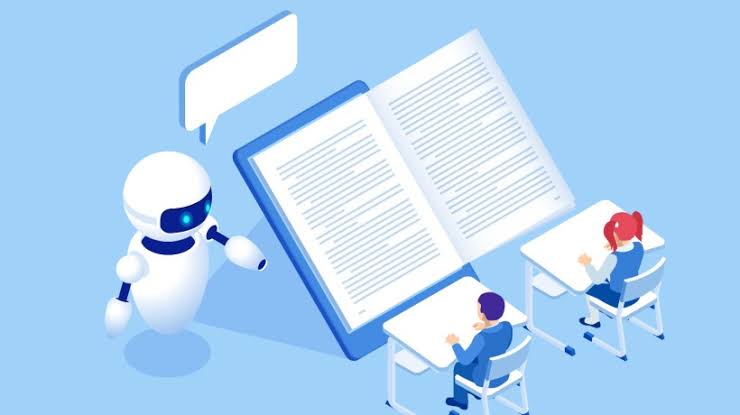
For most of history, learning a language well required access to something scarce: a knowledgeable, patient human willing to spend hours correcting your mistakes. That access has always been unevenly distributed. A student in a well-funded school might have a native-speaking teacher and small class sizes; a student studying alone in a rural town or a low-income neighborhood might have neither. Free AI tutors are quietly closing that gap, and in doing so, they’re reshaping what it means to learn English — not as a replacement for teachers, but as something closer to a tireless, endlessly available study partner that was never available at scale before.
This article looks at what free AI tutors actually offer today, why they represent a genuine shift rather than just another app, where their real limitations lie, and what the next several years are likely to bring.
From Static Apps to Responsive Tutors
The first generation of language-learning apps — flashcard systems, gamified vocabulary drills, pre-recorded pronunciation exercises — were valuable but fundamentally static. They could quiz you and track your progress, but they couldn’t actually converse with you, understand what you meant when you phrased something awkwardly, or adjust their explanation on the fly based on your specific confusion.
AI tutors change that dynamic. Instead of selecting from a menu of pre-written exercises, a learner can simply describe what they’re struggling with — “I never know when to use ‘the’ before a noun” — and get an explanation tailored to that exact confusion, followed by examples and practice sentences generated on the spot. If the explanation doesn’t land, the learner can ask again, in different words, or ask for it in simpler language, and the tutor adapts immediately. This kind of responsive back-and-forth was previously only possible with a human teacher; now it’s available to anyone with an internet connection, for free, at any hour.
Why “Free” Matters More Than It Might Seem
It’s tempting to treat “free” as a minor detail — a nice bonus on top of a good product. But in language education specifically, cost has historically been one of the largest barriers to fluency, and removing it changes who gets to participate.
Consider the economics of traditional English instruction: a private tutor might charge a substantial hourly rate, and even structured group classes at a language school represent a real financial commitment for many families, particularly in countries where the local currency doesn’t stretch as far against tutoring rates typically set with wealthier markets in mind. For millions of learners around the world — adult immigrants working full-time jobs, students in under-resourced schools, people preparing for exams like IELTS or TOEFL to study or work abroad — the cost of consistent, personalized instruction has simply been out of reach.
Free AI tutors don’t solve every problem this creates, but they meaningfully lower the floor. A learner with a smartphone and an internet connection can now get corrected on their grammar, practice a job interview in English, or ask endless questions about confusing idioms, without needing to budget for it. That’s a structural change, not just a convenience.
What Makes AI Tutoring Genuinely Effective
A few specific properties of AI tutors explain why they’ve become useful for language learning in particular, beyond just being cheap.
Infinite patience. A human tutor, however dedicated, gets tired of explaining the same grammar point for the tenth time in a session. An AI tutor doesn’t. This matters enormously for language acquisition, which depends heavily on repetition and spaced practice.
No social risk. Speaking a new language in front of another person carries real social stakes — fear of embarrassment, of being judged, of wasting someone else’s time. Practicing with an AI removes that risk almost entirely, which tends to lower anxiety and, in turn, increase how much a learner is willing to attempt and how quickly they progress.
On-demand availability. Learning doesn’t always happen at the times life makes convenient. A learner might have a free 20 minutes at 11 p.m. or during a work break at 2 p.m.; a human tutor’s schedule rarely lines up with these moments, but an AI tutor is available at both.
Adaptive difficulty. A good AI tutor can genuinely adjust the complexity of its own language in real time — simplifying vocabulary for a beginner, or deliberately introducing more nuanced phrasing for an advanced learner — something that’s difficult for static course materials to do well.
Multimodal practice. Many free AI tools now support both text and voice interaction, letting learners move fluidly between reading, writing, listening, and speaking practice within a single conversation, rather than switching between separate apps for each skill.
The Real Limitations
None of this means AI tutors are a complete substitute for human instruction, and it’s worth being honest about where the current generation of tools still falls short.
Cultural and emotional nuance. Language is inseparable from culture, humor, and social context, and a lot of what makes someone sound truly fluent — knowing when a joke lands, reading the emotional register of a conversation, picking up on regional slang — is still something people learn best from other people.
Calibration and accuracy. AI-generated feedback, particularly around subtle grammar judgments or estimated test scores, isn’t always perfectly accurate. General-purpose AI assistants, for instance, tend to have a wider margin of error when estimating something like an IELTS band score compared to tools specifically calibrated against official scoring rubrics.
The accountability gap. A major driver of consistent progress in traditional classes is simply having somewhere to be and someone expecting you to show up prepared. AI tutors, being available anytime, paradoxically make it easier to skip practice altogether, since there’s no fixed appointment creating gentle social pressure to stay consistent.
Depth of correction on subtle errors. While AI tutors are excellent at catching clear grammar mistakes, some of the more nuanced issues that separate an advanced speaker from a native-level one — awkward collocations, unnatural register, subtle overuse of certain structures — can be harder for even a well-prompted AI to reliably flag compared to an experienced human teacher’s ear.
The Emerging Model: Blended Learning
The most realistic picture of where things are heading isn’t “AI replaces teachers,” but rather a blended model where AI tutors absorb the repetitive, high-volume parts of language practice — daily conversation drills, grammar correction, vocabulary building, exam-style mock practice — freeing up human teachers and tutors to focus on what they do best: cultural context, nuanced feedback, motivation, and the kind of connection that keeps a learner engaged over the long term.
This mirrors what’s already happening in other areas of education. Human teachers increasingly act less as the sole source of information and more as guides who help learners make sense of what they’ve already practiced independently. In language learning specifically, this could mean a student spends their week doing daily AI-assisted conversation practice and grammar review, then meets a human tutor once a week for a session focused specifically on pronunciation nuance, cultural context, or exam strategy — getting far more out of that limited human time because the basics have already been reinforced.
What’s Likely to Improve Next
A few developments are already visible on the horizon and will likely deepen over the next few years:
- Better voice interaction, with more natural-sounding speech, lower latency, and more accurate handling of accented or non-native speech input, making spoken practice feel closer to a real conversation.
- More accurate, exam-calibrated scoring, as more tools are specifically trained against official rubrics for IELTS, TOEFL, and similar exams rather than relying on general language understanding alone.
- Persistent memory of a learner’s progress, allowing tutors to remember recurring mistakes across weeks or months and proactively revisit them, rather than starting fresh in every conversation.
- Deeper integration with formal curricula, as schools and universities increasingly build AI-assisted practice into coursework rather than treating it as an unofficial supplement students find on their own.
A Genuine Shift, Not a Gimmick
It’s easy to be skeptical of any technology described as “the future of learning” — plenty of edtech trends have overpromised and underdelivered. But free AI tutors are already doing something concrete and measurable: they’re giving millions of learners access to a kind of responsive, patient, always-available conversation partner that simply didn’t exist for most people a few years ago. They won’t replace the value of a great human teacher, and they shouldn’t try to. But as a tool that dissolves the biggest traditional barriers to consistent practice — cost, availability, and social anxiety — free AI tutors represent one of the most meaningful and lasting changes in how English, and likely every other language, will be learned going forward.