
Reaching B2, C1 or C2 English takes more than memorizing vocabulary or completing an app course. Your timeline depends on your current level, weekly study hours, exposure to English and how consistently you practice speaking, listening, reading and writing.
This guide explains realistic study timelines, the difference between each CEFR level, and how to estimate the time you may need to reach your target.
Quick answer: learners starting from beginner level may need approximately 500–600 guided learning hours to reach B2, 700–800 hours to reach C1, and 1,000–1,200 hours or more to approach C2. These are broad planning estimates, not guarantees or universal requirements. Actual progress varies considerably.
Possible with regular study, depending on your starting point and weekly commitment.
Independent communicationRequires broader vocabulary, nuanced comprehension and confident communication.
Effective professional and academic useOften a longer journey focused on precision, nuance and highly flexible language use.
Near-complete command for many tasksThese calendar ranges are illustrative, assuming a learner studies consistently and uses English actively. They are not official CEFR deadlines. The hour estimates below provide a more useful starting point for planning.
1. What Do B2, C1 and C2 Mean in English?
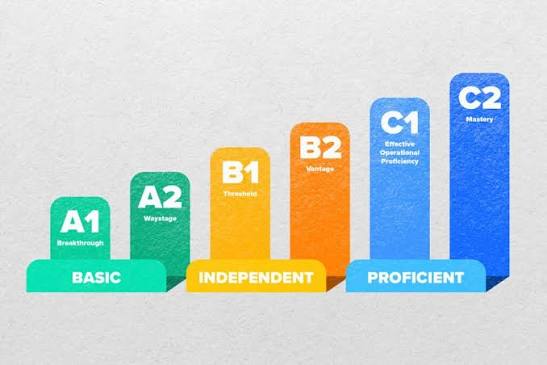
The Common European Framework of Reference for Languages (CEFR) organizes language ability into six levels: A1, A2, B1, B2, C1 and C2. Each level describes what a person can typically do with a language rather than simply how many words they know.
B2 English: Upper-Intermediate
At B2, you can communicate with a reasonable degree of fluency and independence. You can usually follow the main ideas of complex discussions, understand many authentic articles and participate in conversations without constantly searching for words.
- Discuss familiar and unfamiliar topics with reasonable confidence.
- Understand the main arguments in many news reports, interviews and presentations.
- Write clear, structured emails, essays and reports.
- Explain opinions, compare options and support arguments with examples.
B2 is a common target for university admissions, international work opportunities and situations where independent English communication is important. However, individual institutions and employers set their own requirements.
C1 English: Advanced
C1 means you can use English flexibly and effectively in social, academic and professional situations. You can understand demanding texts, recognize implied meaning and express ideas with relatively little hesitation.
- Follow long presentations and complex discussions, including unfamiliar subjects.
- Write well-structured texts with appropriate tone and logical organization.
- Express complex ideas precisely and adapt language to different audiences.
- Understand a wide range of idiomatic expressions and nuanced language in context.
C1 can be particularly valuable for postgraduate study, professional communication, presentations and roles involving extensive reading or writing in English.
C2 English: Proficiency
C2 is the highest CEFR level. It describes the ability to understand virtually everything encountered with ease, synthesize information from different sources and express subtle distinctions of meaning accurately.
- Understand demanding texts and conversations with very little difficulty.
- Summarize information from spoken and written sources coherently.
- Communicate precisely even in complex or unfamiliar situations.
- Recognize subtle differences in tone, register, implication and meaning.
C2 does not mean knowing every English word or never making mistakes. It means demonstrating an exceptionally high level of language control across a broad range of tasks.
2. How Many Hours Does It Take to Reach B2, C1 or C2?
Cambridge English provides commonly cited cumulative guided-learning estimates for learners progressing from beginner level. These figures are useful for planning, but the actual time required depends on individual circumstances.
| Target level | Approximate cumulative guided hours | Typical ability |
|---|---|---|
| A1 | 90–100 hours | Basic everyday expressions and simple interactions. |
| A2 | 180–200 hours | Simple routine communication. |
| B1 | 350–400 hours | Independent communication in many familiar situations. |
| B2 | 500–600 hours | Upper-intermediate, independent language use. |
| C1 | 700–800 hours | Advanced, flexible communication. |
| C2 | 1,000–1,200 hours or more | Highly proficient use across complex situations. |
These are approximate cumulative hours from the beginning of the learning journey, not additional hours required after reaching the previous level. A learner already at B1 does not normally need to repeat the entire beginner-to-B2 journey.
3. How Long Does Each Level Take by Study Schedule?
To estimate calendar time, divide the number of learning hours you still need by your average weekly study hours. The table below uses illustrative totals from beginner level, assuming steady progress without long breaks.
| Study schedule | Hours per year | B2 estimate | C1 estimate | C2 estimate |
|---|---|---|---|---|
| 2 hours/week | 104 | 4.8–5.8 years | 6.7–7.7 years | 9.6–11.5+ years |
| 5 hours/week | 260 | 1.9–2.3 years | 2.7–3.1 years | 3.8–4.6+ years |
| 10 hours/week | 520 | 11.5–13.8 months | 16–18.5 months | 1.9–2.3+ years |
| 15 hours/week | 780 | 7.7–9.2 months | 10.3–12.3 months | 1.3–1.5+ years |
| 25 hours/week | 1,300 | 4.6–5.5 months | 6.5–7.4 months | 9.2–11.1+ months |
These calculations show why study intensity matters. However, they are mathematical illustrations rather than promises of fluency by a specific date. Intensive learners may need additional time for consolidation, and more hours do not always produce proportionally faster results.
4. Calculate Your Estimated English Learning Timeline
Use this calculator to estimate how long reaching your target might take based on an approximate learning-hour budget. The calculation assumes consistent weekly study and uses broad CEFR planning estimates.
English Study Time Calculator
The calculator uses representative cumulative-hour estimates (A1: 95, A2: 190, B1: 375, B2: 550, C1: 750, C2: 1,100). It cannot assess your actual proficiency or guarantee a test result.
5. What Factors Affect How Quickly You Learn English?
Your starting level
Your current ability is one of the biggest factors. Someone who can already hold conversations at B1 has a substantial advantage over a complete beginner aiming for B2. If you have studied English before, you may also regain previously learned skills more quickly than you learned them initially.
Consistency matters more than occasional marathons
Studying for 45–60 minutes most days can be easier to maintain than studying for six hours on one weekend day. Frequent exposure helps reinforce vocabulary, grammar and listening patterns. Longer sessions can still be useful when they include speaking practice, writing assignments or mock exams.
Active practice versus passive exposure
Listening to English while doing other tasks can increase familiarity with the language, but it may not be enough to develop advanced speaking or writing skills. Active practice requires retrieving vocabulary, forming sentences, checking comprehension and correcting mistakes.
Feedback and correction
A teacher, tutor, language partner or reliable feedback tool can help you identify recurring errors. Without feedback, it is possible to repeat the same grammar mistakes or pronunciation problems for months. Correction is especially useful when preparing for C1 or C2, where precision and appropriate language use become increasingly important.
Your native language and previous experience
Languages that share vocabulary, writing systems or grammatical features with English may offer some advantages. Your experience learning other languages, familiarity with English sounds and exposure to English-speaking environments can also influence progress.
Your learning goals
Someone who needs B2 for everyday professional conversations may prioritize different skills from someone preparing for an academic English examination. A test score can be achieved through targeted preparation, but developing broad, lasting proficiency requires practice beyond memorizing exam templates.
6. How to Reach B2 English Faster
B2 is often a practical first major goal because it supports independent communication in many work, travel and study situations. To make progress efficiently, build a routine that develops all four skills.
- Study core grammar: focus on verb tenses, conditionals, passive structures, relative clauses and complex sentences.
- Learn vocabulary in context: study useful phrases, collocations and example sentences rather than isolated words.
- Listen every day: use podcasts, interviews, news reports and videos that are challenging but understandable.
- Speak several times per week: summarize an article, describe an experience or discuss a question with a partner.
- Write regularly: practice emails, opinion paragraphs, summaries and longer essays, then revise them using feedback.
- Review errors: keep a record of mistakes and revisit them until you can use the correct form naturally.
A simple weekly schedule could include three listening sessions, three speaking sessions, two writing tasks, daily vocabulary review and several focused grammar sessions. Adjust the balance to your weakest skills and available time.
7. How to Progress from B2 to C1
The transition from B2 to C1 is not simply about learning more grammar. It involves expressing complex ideas clearly, understanding subtle meanings and communicating effectively in demanding situations.
Read more challenging material
Read long-form journalism, essays, professional articles and books on unfamiliar subjects. Pay attention to how writers structure arguments, qualify claims and connect ideas across paragraphs.
Develop precise vocabulary
Learn collocations, phrasal verbs, transition phrases and differences between near-synonyms. For example, understand the difference between “raise an issue,” “address a concern” and “resolve a problem.” They overlap in meaning but are not interchangeable in every context.
Practice extended speaking
Move beyond short answers. Explain a position, compare alternatives, defend an argument and summarize information from multiple sources. Record yourself occasionally to identify hesitation, unclear pronunciation and repetitive wording.
Improve writing structure and tone
Practice reports, proposals, analytical essays and professional correspondence. Focus on logical progression, accurate grammar, appropriate register and concise expression rather than using complicated words unnecessarily.
8. What Does It Take to Reach C2 English?
C2 generally requires extensive experience using English across a broad range of contexts. At this stage, the challenge is less about basic communication and more about nuance, accuracy, flexibility and comprehension of difficult material.
To develop C2-level skills, consider these activities:
- Read literature, academic writing, editorials and specialist texts from different fields.
- Listen to fast conversations, debates, lectures and interviews with varied accents.
- Practice summarizing several sources without losing important distinctions.
- Write analytical essays and detailed reports, then revise them for precision and tone.
- Study idioms, humor, implied meaning and differences between formal and informal language.
- Seek feedback from highly proficient speakers or experienced instructors.
Reaching C2 does not require abandoning your accent or imitating every cultural expression. The goal is to understand and communicate complex meanings with a high degree of control.
9. Can You Reach B2 in Six Months?
Yes, it can be possible for some learners, but it depends heavily on their starting level and the intensity and quality of their study. A learner who is already at B1 may need considerably less time than someone starting from A0.
For a complete beginner, reaching B2 in six months would require a demanding routine, potentially involving several hours of focused learning per day, regular feedback and frequent real-world English use. Even with intensive study, the outcome is not guaranteed.
Before setting a six-month target, estimate your remaining learning hours and check your progress with a reputable placement test or teacher. It is better to set a measurable, realistic goal than to rely on an advertisement promising fluency in a few weeks.
10. How Do You Know When You Have Reached B2, C1 or C2?
Finishing a course does not automatically mean you have reached a particular CEFR level. Your proficiency should be evaluated through practical performance across speaking, listening, reading and writing.
This checklist is a self-reflection tool, not an official CEFR assessment. For a more reliable estimate, use a recognized placement test, work with a qualified teacher or take an appropriate standardized examination.
11. Does an English Exam Prove Your CEFR Level?
Examinations such as IELTS, TOEFL, Cambridge English Qualifications and the PTE Academic assess English skills using different scoring systems. Some scores can be mapped to CEFR levels, but the relationship depends on the test, score range and version.
If you need English for immigration, university admission or employment, check the exact requirements of the organization receiving your results. A required test score is not always interchangeable with a general CEFR label, and institutions may set different minimum scores for individual skills.
Official information is available from the relevant test providers:
- Cambridge English: CEFR levels
- IELTS official website
- TOEFL official website
- PTE Academic official website
12. A Practical 12-Week English Study Plan
A 12-week plan will not take every learner from beginner to B2 or C1. Instead, it can establish a sustainable routine, improve specific skills and help you measure progress toward your longer-term target.
| Weeks | Main focus | Suggested activities |
|---|---|---|
| 1–2 | Assess and plan | Take a placement test, identify weak skills and create a weekly schedule. |
| 3–4 | Build foundations | Review relevant grammar, high-frequency vocabulary and listening comprehension. |
| 5–6 | Increase output | Practice speaking, record responses and write short texts with corrections. |
| 7–8 | Use authentic material | Read articles, listen to longer recordings and summarize what you learn. |
| 9–10 | Target weaknesses | Review recurring mistakes and focus on your weakest language skill. |
| 11–12 | Measure progress | Complete a practice assessment and compare results with your initial baseline. |
At the end of the 12 weeks, adjust your study plan based on evidence. You may be ready to move to more challenging material, or you may need more practice with a specific skill before progressing.
Frequently Asked Questions
How long does it take to reach B2 English from zero?
A common planning estimate is around 500–600 guided learning hours from beginner level. At five hours per week, that represents roughly two years or more of study time. More intensive schedules may shorten the calendar timeline, although individual outcomes vary.
How many months does it take to reach C1 English?
There is no single answer. From beginner level, approximately 700–800 cumulative guided hours is a commonly cited estimate. At ten hours per week, the arithmetic suggests around 16–18 months, but the real timeline depends on your progress and learning conditions.
Is C2 much harder than C1?
For many learners, yes. C2 requires greater precision, flexibility and comprehension of nuanced language. Progress at advanced levels can feel slower because the remaining weaknesses are often subtle rather than basic.
Can I reach B2 by studying English one hour a day?
It is possible, but the timeline depends on your starting level and the quality of your practice. One hour per day adds up to about 365 hours in a year, before accounting for missed sessions or periods of review.
Can an app take me from A1 to C1?
Apps can help with vocabulary, grammar, listening and habit formation. However, reaching C1 usually also requires substantial reading, writing, extended conversation and feedback. Combining an app with other learning methods is often more effective than relying on one tool alone.
Do I need to live in an English-speaking country to reach C1 or C2?
No. Living abroad can provide valuable exposure, but it is not a requirement. Learners can develop advanced English through structured study, frequent conversations, challenging reading, listening practice and consistent feedback wherever they live.
Should I aim for B2, C1 or C2?
Choose the level that matches your goals. B2 may be sufficient for many everyday and professional situations, while C1 may be useful for demanding academic or workplace communication. C2 is appropriate when you need exceptionally advanced proficiency or have a specific reason to pursue it.
Final Thoughts: Set a Realistic English Learning Goal
Reaching B2, C1 or C2 English is a long-term project, but it becomes more manageable when you break it into measurable stages. Start by identifying your current level, estimate how many hours you can study each week and build a routine that includes active practice and feedback.
For many learners, B2 is a practical first milestone. Once you can communicate independently, you can focus on the precision, flexibility and depth needed for C1 and eventually C2. Consistent, purposeful practice is more useful than chasing a guaranteed fluency deadline.
Your next step: assess your current English level, choose a target and schedule your first week of study. Track your hours and review your progress every month so you can adjust your plan based on what is working.