
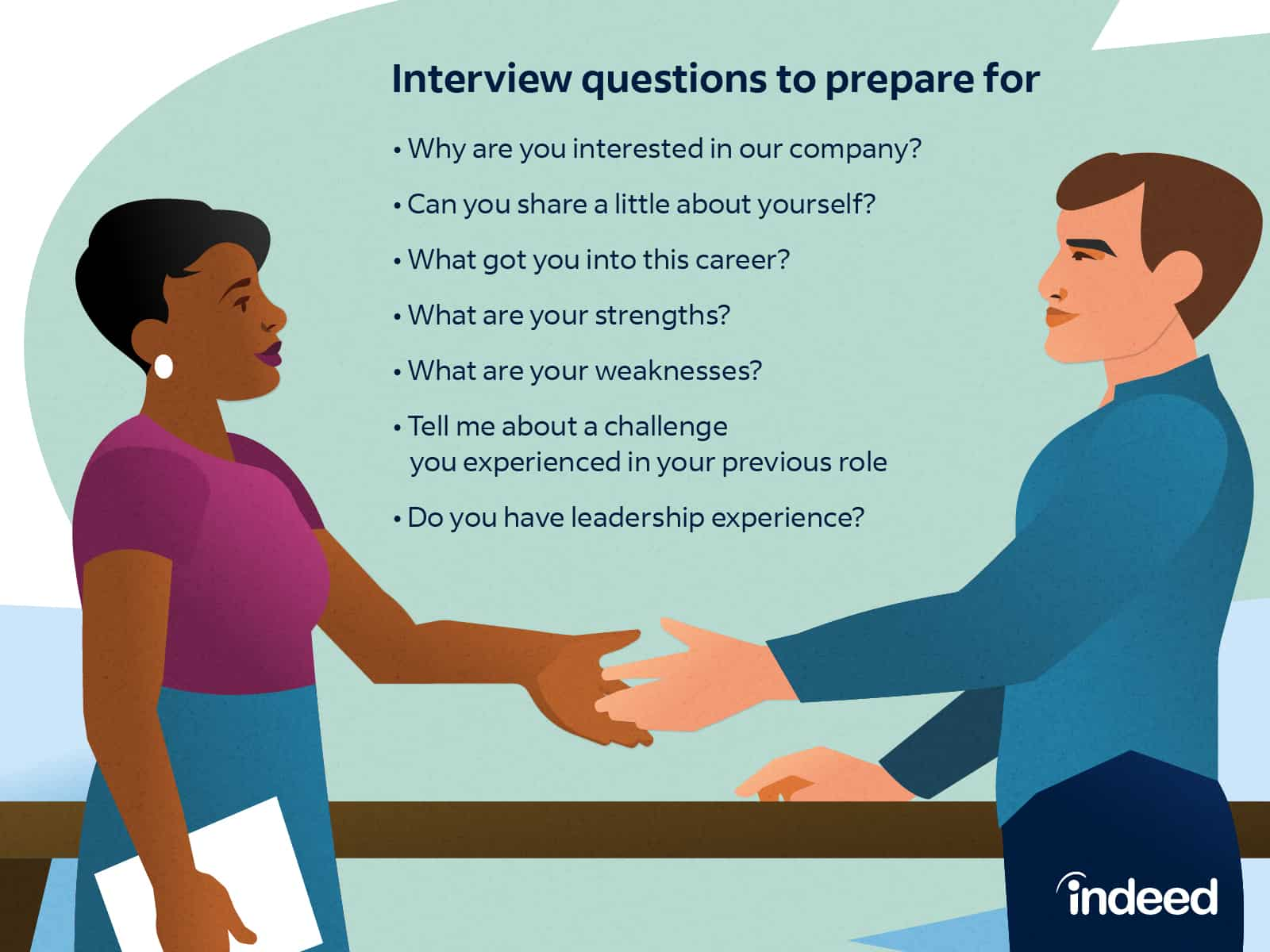
Learn how to answer common job interview questions in English with practical sample answers, useful expressions and simple strategies to make a positive impression.
Whether you are applying for your first job, changing careers or interviewing for an international company, preparing your answers in advance can help you communicate more clearly and confidently.
A job interview in English can feel challenging even when you have the qualifications for the position. You may know what you want to say but struggle to find the right words, organize your ideas or explain your professional experience naturally.
The solution is not to memorize an entire script. Instead, prepare a few key points, learn useful sentence structures and practice explaining your experience in your own words. This guide covers the most common interview questions, examples for different situations and an interactive tool to help you prepare your own answers.
Explain who you are, what you do and why your background is relevant.
Use specific examples that demonstrate skills and achievements.
Discuss weaknesses, mistakes and difficult situations honestly.
Use clear, natural expressions instead of unnecessarily complicated language.
1. Tell Me About Yourself
This is one of the most common job interview questions in English. The interviewer usually wants a concise professional introduction, not your complete life story.
A useful structure is:
- Present: Explain your current role, studies or professional focus.
- Past: Mention relevant experience, skills or achievements.
- Future: Explain what you want to contribute in the position.
I’m a marketing professional with four years of experience in digital marketing and content strategy. In my current role, I manage online campaigns, analyze performance data and work with different teams to improve customer engagement. I’m now looking for an opportunity to take on more responsibility and contribute to a company with a strong focus on innovation.
I’m a recent business administration graduate with a strong interest in customer service and operations. During my studies, I developed skills in communication, organization and problem-solving through group projects and presentations. I’m looking for an entry-level position where I can apply what I’ve learned, gain practical experience and contribute to a team.
Tip: Aim for approximately 45–90 seconds. Keep your answer relevant to the job and avoid repeating every detail already listed on your resume.
2. Why Do You Want to Work Here?
Employers ask this question to understand whether you have researched the company and whether the position matches your interests and goals.
Try to connect three elements: something specific about the company, your relevant skills and the contribution you hope to make.
I’m interested in working here because your company focuses on customer experience and continuous improvement. My experience in client communication and process coordination matches the requirements of this position. I believe I could contribute to the team while continuing to develop my professional skills.
Before the interview, research the company’s products, services, values and recent projects. Avoid saying only that you want the job because of the salary or because you need employment. Compensation can be important, but this question is an opportunity to demonstrate genuine interest in the role.
3. What Are Your Greatest Strengths?
Choose strengths that are relevant to the job description. Instead of listing several adjectives, explain how you use a particular skill and support it with an example.
Useful strengths to mention
- Communication and teamwork
- Problem-solving and critical thinking
- Time management and organization
- Adaptability and willingness to learn
- Attention to detail
- Leadership and decision-making
One of my main strengths is problem-solving. When an unexpected issue comes up, I try to understand the cause, evaluate possible solutions and communicate with the people involved. In my previous role, this approach helped me identify a recurring delay in our workflow and suggest a more efficient process.
I’d say one of my greatest strengths is teamwork. I listen to different perspectives, share information clearly and try to make sure everyone understands the team’s priorities. I find that good communication helps prevent misunderstandings and keeps projects moving forward.
4. What Is Your Biggest Weakness?
This question can be uncomfortable, especially if English is not your first language. The interviewer is usually looking for self-awareness and a willingness to improve.
Choose a genuine but manageable weakness, explain what you are doing to address it and describe the progress you have made. Avoid presenting a critical requirement of the role as a weakness unless you can clearly explain how you are improving.
One area I’ve been working on is prioritizing tasks when several projects have similar deadlines. In the past, I sometimes spent too much time on smaller details. I’ve started using a weekly priority list and setting time limits for individual tasks. This has helped me focus on the most important work first.
Other possible examples include becoming more comfortable with public speaking, learning to delegate tasks or improving your confidence when presenting ideas. Choose something true about you rather than using a weakness simply because it sounds good.
5. Why Should We Hire You?
This question gives you a chance to connect your experience, skills and motivation directly to the employer’s needs.
I believe I’m a strong candidate because my experience matches the main requirements of the position, particularly in organization, communication and problem-solving. I’m comfortable learning new tools, working with different teams and taking responsibility for my tasks. I’d bring a practical attitude, a willingness to learn and a strong commitment to meeting the team’s objectives.
To make this answer more persuasive, identify two or three requirements in the job description and show how your background matches them. Use evidence wherever possible instead of relying on broad claims such as “I’m the best person for the job.”
6. Why Did You Leave Your Previous Job?
Keep your response professional and forward-looking. You do not need to criticize a former manager or employer to explain why you are looking for a change.
I learned a great deal in my previous role and appreciated the experience I gained. I’m now looking for a position that offers more opportunities to develop my skills, take on new challenges and contribute at a higher level.
My previous position ended because of a change in the company’s staffing needs. I used the time afterward to review my career goals, strengthen my skills and look for a role that better matches my experience.
Adapt the wording to your real circumstances. If you were laid off, made redundant or left for personal reasons, a concise and truthful explanation is usually better than an elaborate excuse.
7. Tell Me About a Challenge You Faced at Work
Behavioral interview questions ask you to describe a real situation and explain what you did. A useful structure is the STAR method:
Briefly explain the context and the challenge.
Describe what you were responsible for achieving.
Explain the specific steps you personally took.
Share the outcome and what you learned.
In my previous role, our team was falling behind on a project because information was coming from several different sources. I was responsible for coordinating the updates and helping the team meet the deadline. I created a shared tracking document, clarified who was responsible for each task and introduced short progress check-ins. As a result, we improved visibility across the project and completed the remaining work more efficiently. I learned how important clear responsibilities and regular communication are.
Your example does not need to involve a major crisis. Resolving a customer complaint, organizing a busy schedule, fixing a recurring error or helping a colleague can demonstrate valuable skills. Focus on your own contribution and be honest about the outcome.
8. Where Do You See Yourself in Five Years?
Employers often ask this question to understand your professional goals and whether the position fits your longer-term plans. You do not need to predict your exact job title five years from now.
In five years, I’d like to have developed deeper expertise in my field and taken on greater responsibility. I hope to contribute to more complex projects, continue learning from experienced colleagues and become someone the team can rely on. This position seems like a good opportunity to build that foundation.
Keep your answer realistic and relevant to the role. Show that you want to develop professionally while contributing to the organization.
9. What Are Your Salary Expectations?
Discussing salary in English can be challenging because you need to sound confident while leaving room for negotiation. Research typical compensation for the position, industry, location and experience level before the interview.
Based on my experience, the responsibilities of the role and my understanding of the market, I’m looking for a salary in the range of [amount] to [amount]. However, I’m open to discussing the overall compensation package and the expectations for the position.
If you need more information before naming a figure, you could say:
I’d like to learn a little more about the responsibilities and the overall compensation package before giving a specific figure. Could you share the budgeted salary range for this position?
Replace the placeholders with a realistic range for the job and location. Avoid giving an arbitrary figure without researching the market.
10. How Do You Handle Stress and Pressure?
The interviewer wants to know how you respond to deadlines, competing priorities and unexpected problems. Explain your process rather than simply saying that you work well under pressure.
When I’m under pressure, I start by identifying the most urgent tasks and breaking larger projects into manageable steps. I communicate early if priorities conflict and ask for clarification when necessary. This helps me stay organized, focus on what matters most and avoid unnecessary last-minute problems.
If possible, add a short example from your work or studies that demonstrates how your approach helped you manage a demanding situation.
11. What Do You Know About Our Company?
This question tests whether you have prepared for the interview. Research the company’s products, customers, market position, mission and recent developments before the meeting.
From my research, I understand that your company provides [product or service] to [customer group]. I was particularly interested in [specific project, service or company initiative]. The role caught my attention because it combines [relevant responsibility] with [relevant skill], which matches my background and interests.
Make this answer specific to the actual employer. Generic statements about being a “leading company” are less persuasive than showing that you understand what the organization does.
12. How Do You Answer Interview Questions If You Have No Experience?
If you are applying for your first job, focus on transferable skills, academic projects, volunteering, internships, personal projects and other relevant experiences. You can demonstrate initiative and responsibility even if you have not held a formal job.
Although I haven’t had a full-time professional role yet, I’ve developed relevant skills through my studies and group projects. For example, I worked with classmates to organize a project, divide responsibilities and deliver the final presentation on time. That experience helped me improve my teamwork, communication and time-management skills. I’m eager to apply those skills in a professional environment.
Use examples you can explain in detail if the interviewer asks follow-up questions. It is better to describe a small, genuine achievement than to exaggerate your experience.
13. Useful English Phrases for Job Interviews
These expressions can help you organize your answers, provide examples and respond professionally when you need a moment to think.
Starting an answer
- That’s a great question.
- I’d say that one of my main strengths is…
- Based on my experience…
- One example that comes to mind is…
Giving examples
- In my previous role, I was responsible for…
- One situation I learned a lot from was…
- For example, I helped the team by…
- As a result, we were able to…
Buying time to think
- Let me think about that for a moment.
- That’s an interesting question. I’d approach it by…
- I’d like to give you a specific example.
- Let me organize my thoughts briefly.
Clarifying a question
- Could you please clarify what you mean by that?
- Would you mind repeating the question?
- Are you asking about my experience with…?
- Could you rephrase the question, please?
14. Interactive Job Interview Answer Builder
Use this tool to prepare a personalized answer. Select a common question, enter a few details about your experience and generate a simple structure you can practice aloud.
Build Your Interview Answer
This tool creates a draft structure. Review it carefully and make sure every detail reflects your real experience.
15. Common Mistakes to Avoid in an English Job Interview
Memorized answers can sound unnatural. Remember the key points and practice explaining them in different ways.
Answer the question directly, then add a relevant example. Avoid unrelated details.
Clear, accurate English is more effective than forcing advanced expressions into every sentence.
Instead of saying you are an excellent leader, describe a situation in which you helped a team succeed.
Explain difficult situations professionally and focus on what you learned or what you want next.
Prepare two or three thoughtful questions about the role, team priorities or expectations.
16. Questions You Can Ask the Interviewer
When the interviewer asks, “Do you have any questions for us?”, asking relevant questions shows that you are considering the role seriously.
- What would success look like in this role during the first three months?
- What are the main priorities for the person joining this team?
- How would you describe the team culture?
- What opportunities are available for professional development?
- What are the next steps in the hiring process?
Choose questions that have not already been answered during the interview. You can also ask about the tools, responsibilities or challenges associated with the role.
17. Job Interview Preparation Checklist
Use this checklist before your next interview in English.
Frequently Asked Questions
What are the most common job interview questions in English?
Common questions include “Tell me about yourself,” “What are your strengths and weaknesses?”, “Why do you want to work here?”, “Why should we hire you?” and “Where do you see yourself in five years?” Behavioral questions about challenges, teamwork and problem-solving are also common.
How can I answer interview questions in English if my level is intermediate?
Use short, clear sentences and focus on organizing your ideas. Prepare key vocabulary for your job, practice common questions aloud and use real examples. You do not need perfect grammar to communicate your qualifications effectively.
How long should my interview answers be?
Many straightforward answers can take 30–90 seconds. Behavioral questions may require one or two minutes to explain the situation, your actions and the result. Let the question guide the length of your response.
Should I memorize sample answers?
Use sample answers to learn structure and vocabulary, but personalize them with your own details. Memorizing a script word for word can make it harder to respond naturally to follow-up questions.
How do I explain that I have no work experience?
Highlight transferable skills developed through education, volunteering, internships, group projects or personal projects. Give a specific example that shows responsibility, initiative or problem-solving, and explain how those skills relate to the position.
What should I do if I do not understand an interview question?
Ask the interviewer politely to repeat or clarify it. You can say, “Could you please rephrase the question?” or “Are you asking about my experience with a particular project?” Clarifying is better than answering a different question.
How can I sound more confident in an English interview?
Practice aloud, speak at a comfortable pace and pause briefly before answering. Focus on communicating your experience rather than eliminating every mistake. Preparing specific examples will make it easier to answer follow-up questions.
Conclusion: Prepare, Practice and Answer Naturally
Learning how to answer common job interview questions in English can help you explain your qualifications, demonstrate your strengths and communicate more confidently with employers.
Start by preparing your introduction, identifying relevant achievements and practicing answers to the questions most likely to come up for your role. Use the STAR method for behavioral questions, keep your examples truthful and focus on the value you can bring to the employer.
You do not need perfect English to make a strong impression. Clear communication, thoughtful preparation and genuine examples can help you present yourself professionally and handle the interview with greater confidence.